


Top Robotics for Small Manufacturing Businesses. The manufacturing landscape is undergoing a quiet revolution. In 2026, the fusion of robotics and automation is no longer a luxury reserved for large corporations.
Small manufacturing businesses are discovering that the right robotic solutions can dramatically enhance efficiency, reduce costs, and foster innovation. For entrepreneurs striving to maintain competitiveness in a fast-paced economy, robotics are emerging as indispensable allies.
Harnessing automation doesn’t just streamline processes; it transforms the very DNA of production. For small manufacturers, the question is no longer whether to adopt robotics, but which robotics to integrate, and how to leverage them for maximum impact.
This comprehensive guide explores the Top Robotics for Small Manufacturing Businesses You Need in 2026, highlighting technologies that are cost-effective, adaptable, and capable of transforming operations from mundane to extraordinary.
1. The Automation Imperative for Small Manufacturers
Efficiency is the lifeblood of manufacturing. Small businesses often face challenges such as limited labor resources, rising operational costs, and pressure to meet high-quality standards. Robotics provides a solution by reducing human error, accelerating production cycles, and allowing staff to focus on higher-value tasks.
Embracing robotics is not merely about replacing labor. It’s about creating a synergistic workflow where humans and machines complement each other. Robots can handle repetitive, hazardous, or precision-intensive tasks while humans direct strategy, innovation, and problem-solving.
The result is a leaner, more resilient operation capable of scaling without proportionally increasing expenses. This is the essence of Top Robotics for Small Manufacturing Businesses to Save Costs, combining investment efficiency with operational excellence.
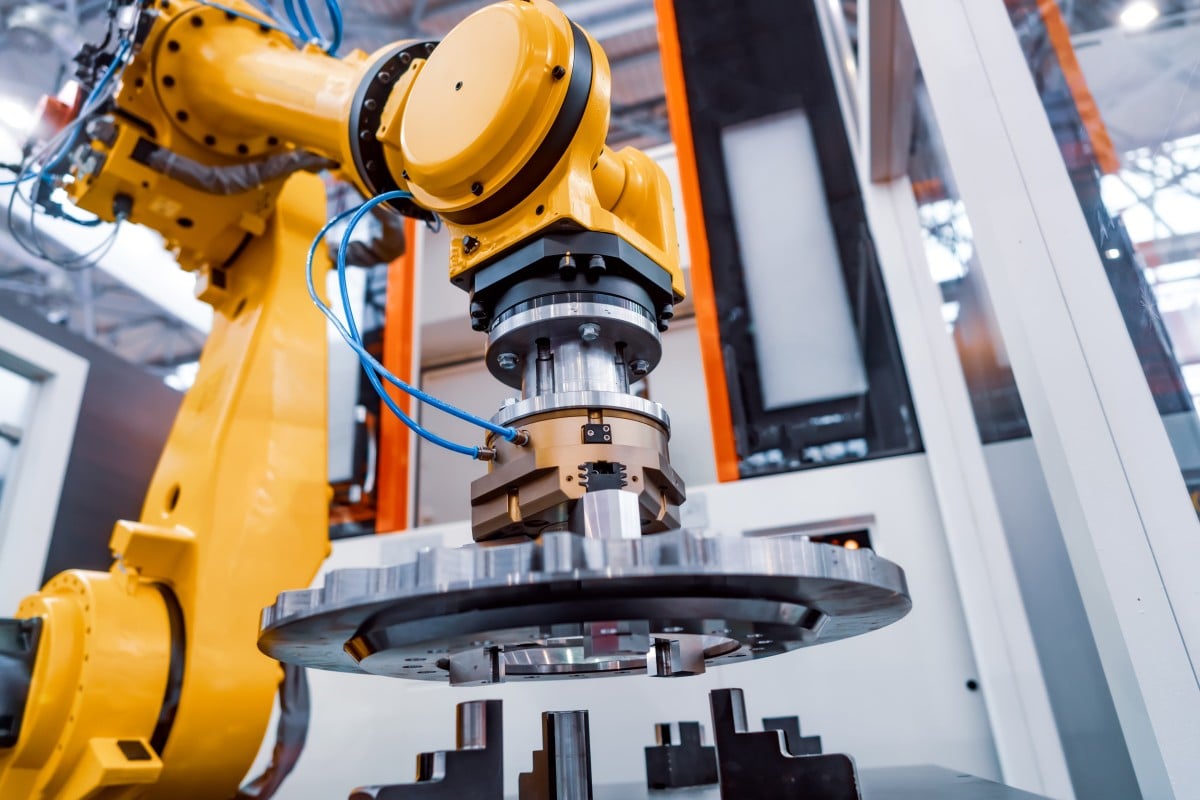
2. Collaborative Robots (Cobots)
One of the most transformative trends in small manufacturing is the rise of collaborative robots, or cobots. Unlike traditional industrial robots that operate in isolation, cobots are designed to work safely alongside human employees.
Key Advantages:
- Ease of Integration: Cobots can be deployed without extensive floor redesigns.
- Safety Features: Advanced sensors and AI-driven motion control reduce accidents.
- Flexibility: Programmable for multiple tasks, from assembly to packaging.
Cobots are particularly effective in small batch production or bespoke manufacturing environments. They allow businesses to scale output without escalating labor costs, perfectly exemplifying Top Robotics for Small Manufacturing Businesses Driving Growth.
Notable cobot models include Universal Robots’ UR series, which offer modularity, and Doosan Robotics’ flexible arms suitable for light to medium payloads.
3. Autonomous Mobile Robots (AMRs)
Inventory movement and logistics often consume a significant portion of labor hours in small manufacturing operations. Autonomous Mobile Robots (AMRs) provide a seamless solution by transporting materials across the factory floor autonomously.
Benefits of AMRs:
- Reduced Downtime: Continuous material flow prevents bottlenecks.
- Operational Accuracy: Integrated sensors prevent collisions and ensure precise delivery.
- Labor Optimization: Employees can redirect efforts toward value-added tasks.
The integration of AMRs represents a strategic shift toward smarter internal logistics. For small businesses looking to optimize resource allocation while maintaining agility, AMRs are a critical component of Top Robotics for Small Manufacturing Businesses Transform Production.
Companies like MiR (Mobile Industrial Robots) and Fetch Robotics have developed platforms that are plug-and-play, minimizing the need for complex IT infrastructure.
4. Robotic Arms for Precision Assembly
Precision assembly is a hallmark of high-quality manufacturing. Robotic arms excel in tasks requiring consistency, speed, and accuracy, such as component assembly, soldering, and fastening.
Advantages:
- Consistency: Every unit is produced to exact specifications.
- Speed: High repetition tasks are completed faster than human labor alone.
- Scalability: Robotic arms can be reprogrammed to accommodate product changes.
Small manufacturers producing electronics, automotive parts, or consumer goods benefit immensely from robotic arms. The ability to scale production while maintaining high standards exemplifies Top Robotics for Small Manufacturing Businesses to Save Costs—reducing errors, waste, and rework.
Brands such as ABB, KUKA, and FANUC provide scalable solutions suitable for small enterprises, offering models that can handle various payloads and tasks.
5. 3D Printing Robots for On-Demand Production
Additive manufacturing, commonly known as 3D printing, has revolutionized prototyping and small-scale production. Robotic systems equipped with 3D printing capabilities allow small manufacturers to produce complex parts with minimal material waste.
Key Benefits:
- Rapid Prototyping: Accelerate design iterations and reduce time-to-market.
- Customization: Easily produce bespoke components tailored to client specifications.
- Material Efficiency: Only the necessary material is used, minimizing waste.
3D printing robots are particularly advantageous for small businesses that require agility. By integrating additive manufacturing, companies can respond quickly to market trends without large inventory overhead. This innovation embodies Top Robotics for Small Manufacturing Businesses Driving Growth, enabling competitive differentiation and faster innovation cycles.
Popular systems include robotic arms adapted for 3D printing, as well as dedicated platforms like Markforged and Ultimaker for high-precision applications.
6. Automated Quality Inspection Robots
Quality control is non-negotiable. Small manufacturing businesses often face challenges in maintaining consistency due to limited staffing. Automated quality inspection robots, equipped with AI-driven vision systems, ensure each product meets specifications before leaving the production line.
Advantages:
- Error Detection: Identify defects invisible to the naked eye.
- Speed: Inspections occur faster than manual processes.
- Data Collection: Generate analytics for continuous process improvement.
These systems not only enhance product quality but also reduce returns and customer complaints, contributing to operational cost savings. For small manufacturers, automated quality control represents a strategic advantage and illustrates Top Robotics for Small Manufacturing Businesses Transform Production.
Solutions from Cognex, Keyence, and Omron integrate seamlessly with existing production lines, offering both hardware and software for end-to-end inspection automation.
7. AI-Powered Process Optimization
Robotics combined with artificial intelligence creates a new paradigm: intelligent manufacturing. AI-powered robots can learn from production data, optimize workflows, and predict maintenance needs, minimizing downtime.
Benefits:
- Predictive Maintenance: Reduce costly unplanned stoppages.
- Workflow Optimization: Adjust operations in real-time based on demand and performance metrics.
- Energy Efficiency: Minimize resource consumption without compromising output.
This approach transforms production from reactive to proactive. Small manufacturing businesses implementing AI-driven robotics achieve a level of operational sophistication previously reserved for large-scale enterprises. This directly aligns with Top Robotics for Small Manufacturing Businesses Driving Growth.
8. Integration Strategies for Small Manufacturers
Adopting robotics is one thing; integrating them effectively into small-scale operations is another. Strategic deployment is key to maximizing ROI.
Steps to Effective Integration:
- Assess Workflow: Identify repetitive, hazardous, or time-intensive tasks.
- Select Robotics: Match the robotic solution to the identified needs.
- Pilot Program: Start with a limited deployment to evaluate performance.
- Scale Gradually: Expand adoption based on measurable results.
- Train Staff: Ensure employees can operate and maintain robotic systems.
By following these steps, small manufacturers can reduce adoption risk and ensure that robotic investments drive tangible improvements. Well-executed integration exemplifies Top Robotics for Small Manufacturing Businesses You Need in 2026, delivering efficiency without disruption.
9. Cost Considerations and ROI
A common misconception is that robotics are prohibitively expensive for small manufacturers. In reality, scalable solutions exist at various price points, often providing rapid returns through labor savings, waste reduction, and increased throughput.
Key Financial Considerations:
- Initial Investment vs. Long-Term Savings: While upfront costs vary, long-term savings can offset expenditures in months.
- Leasing and Subscription Models: Many vendors offer flexible payment structures for small businesses.
- Maintenance Costs: Modern robotics are designed for low maintenance, with predictive servicing reducing unexpected expenses.
By focusing on systems that deliver measurable impact, small manufacturers can achieve ROI quickly, reinforcing the argument for Top Robotics for Small Manufacturing Businesses to Save Costs.
10. Workforce Synergy: Humans and Machines
Robotics should not be viewed as replacements for human labor but as tools that augment human potential. The most successful small manufacturing businesses create a collaborative ecosystem where humans and machines complement one another.
Key Strategies:
- Upskilling Staff: Train employees to operate and program robotic systems.
- Task Reallocation: Free staff from repetitive labor to focus on creative problem-solving.
- Safety Protocols: Implement protocols to ensure safe interaction between humans and robots.
This collaborative approach enhances efficiency, reduces errors, and boosts morale, embodying Top Robotics for Small Manufacturing Businesses Transform Production.
11. Future Trends in Small Manufacturing Robotics
The robotics landscape is evolving rapidly, and small manufacturers must stay ahead to remain competitive.
Emerging Trends:
- Edge AI: On-device intelligence for real-time decision-making without cloud dependence.
- Swarm Robotics: Coordinated robot teams performing complex tasks autonomously.
- Flexible End-of-Arm Tooling: Rapidly interchangeable tools for diverse manufacturing applications.
- Sustainable Robotics: Energy-efficient robots that reduce environmental impact.
Staying informed about these trends ensures small manufacturers can leverage Top Robotics for Small Manufacturing Businesses Driving Growth in innovative ways, maintaining both operational efficiency and competitive advantage.
12. Case Studies of Small Manufacturers Succeeding with Robotics
- Precision Electronics Manufacturer: Implemented cobots and automated inspection robots, reducing defect rates by 30% while increasing throughput by 40%.
- Custom Furniture Producer: Adopted 3D printing robots to create bespoke components, cutting lead times from weeks to days.
- Packaging SME: Integrated AMRs to streamline material movement, freeing staff for quality-focused tasks and boosting overall output.
These examples demonstrate the transformative potential of robotics, reinforcing the argument for Top Robotics for Small Manufacturing Businesses You Need in 2026.
13. Selecting the Right Robotic Partner
Choosing the right vendor is critical for small manufacturers. Beyond cost, consider factors such as customer support, scalability, and ease of integration.
Evaluation Criteria:
- Reliability: Proven track record in similar industries.
- Support: Training, maintenance, and troubleshooting resources.
- Scalability: Ability to grow with your business.
- Flexibility: Robots adaptable to multiple tasks and future innovations.
Investing time in selecting the right partner ensures that robotics adoption drives long-term efficiency and aligns with the vision of Top Robotics for Small Manufacturing Businesses to Save Costs.
14. Overcoming Adoption Challenges
Despite the benefits, small manufacturers may face barriers to robotic adoption:
- Perceived Complexity: Robotics may appear intimidating, but modern systems are user-friendly.
- Financial Constraints: Leasing and modular solutions mitigate high upfront costs.
- Cultural Resistance: Change management and staff training foster acceptance.
Addressing these challenges proactively ensures that robotics are an enabler, not a disruption, and supports Top Robotics for Small Manufacturing Businesses Transform Production.
15. Measuring Success and Continuous Improvement
Adopting robotics is not a one-time event. Success requires continuous measurement and iterative improvement.
Key Metrics:
- Production Throughput: Units produced per hour/day.
- Error Rates: Frequency and severity of defects.
- Labor Efficiency: Reduction in manual hours per unit.
- Cost Savings: Operational savings relative to investment.
Regular assessment ensures that robotics adoption remains aligned with strategic objectives, reinforcing Top Robotics for Small Manufacturing Businesses Driving Growth.
16. Conclusion: Robotics as a Growth Catalyst
Small manufacturing businesses no longer need to view robotics as the domain of large enterprises. With strategic adoption, these technologies offer unparalleled opportunities to reduce costs, enhance precision, and scale production efficiently.
The integration of cobots, AMRs, robotic arms, AI-driven quality control, and 3D printing robots transforms operations from reactive to proactive. Combined with workforce upskilling and process optimization, small manufacturers can achieve a level of efficiency, innovation, and competitiveness previously unimaginable.
Embracing robotics is not just a strategic decision—it is a growth imperative. By investing in the right technologies, small manufacturers position themselves at the forefront of innovation, ready to meet market demands, drive profitability, and maintain sustainable operations.
The future of small manufacturing is automated, intelligent, and adaptable. Businesses that seize this moment will be the ones defining industry standards in 2026 and beyond.
Top Robotics for Small Manufacturing Businesses You Need in 2026, Top Robotics for Small Manufacturing Businesses to Save Costs, Top Robotics for Small Manufacturing Businesses Transform Production, and Top Robotics for Small Manufacturing Businesses Driving Growth are not just trends—they are essential strategies for thriving in a competitive and evolving manufacturing landscape.


More Stories
What will living look like in the digital future
Your Smart Home Just Got Smarter: Smart Devices
AI Just Changed Coding Forever: Future of Tech News